
What Causes Vellus Hair Growth After Laser Hair Removal?
And How Pro 1 Laser’s DioLase Titanium™ Stops It Cold — Literally
What Causes Vellus Hair Growth After Laser Hair Removal?
Truth Bomb #1: Laser hair removal can make hair grow back thicker — if the wrong energy settings and cooling are used.
The Real Reason You’re Seeing More Hair Instead of Less
It’s called paradoxical hypertrichosis.
It happens when follicles get warmed, not destroyed — the same temperature range used in low-level light therapy to stimulate hair growth.
- Here’s how it unfolds on many diode systems:
- Long gliding passes heat the handpiece and skin over time
- Cooling fades — skin feels hotter, the client flinches.
- Operator lowers energy to keep them comfortable.
- Follicles get just enough warmth to “wake up”, not die off.
- Result? Fine vellus hair starts looking thicker and darker over time.

Why the Face & Neck Are the Most Vulnerable
Why the Face & Neck Are Most Vulnerable to Vellus Hair Growth After Laser Hair Removal
- Mostly vellus hair: small, light follicles that require precise dosing.
- Darker skin types (III–VI): need extra-safe cooling to allow adequate energy without burns.
- High sensitivity: pain tolerance limits energy without strong cooling.
- High sensitivity: pain tolerance limits energy without strong cooling.
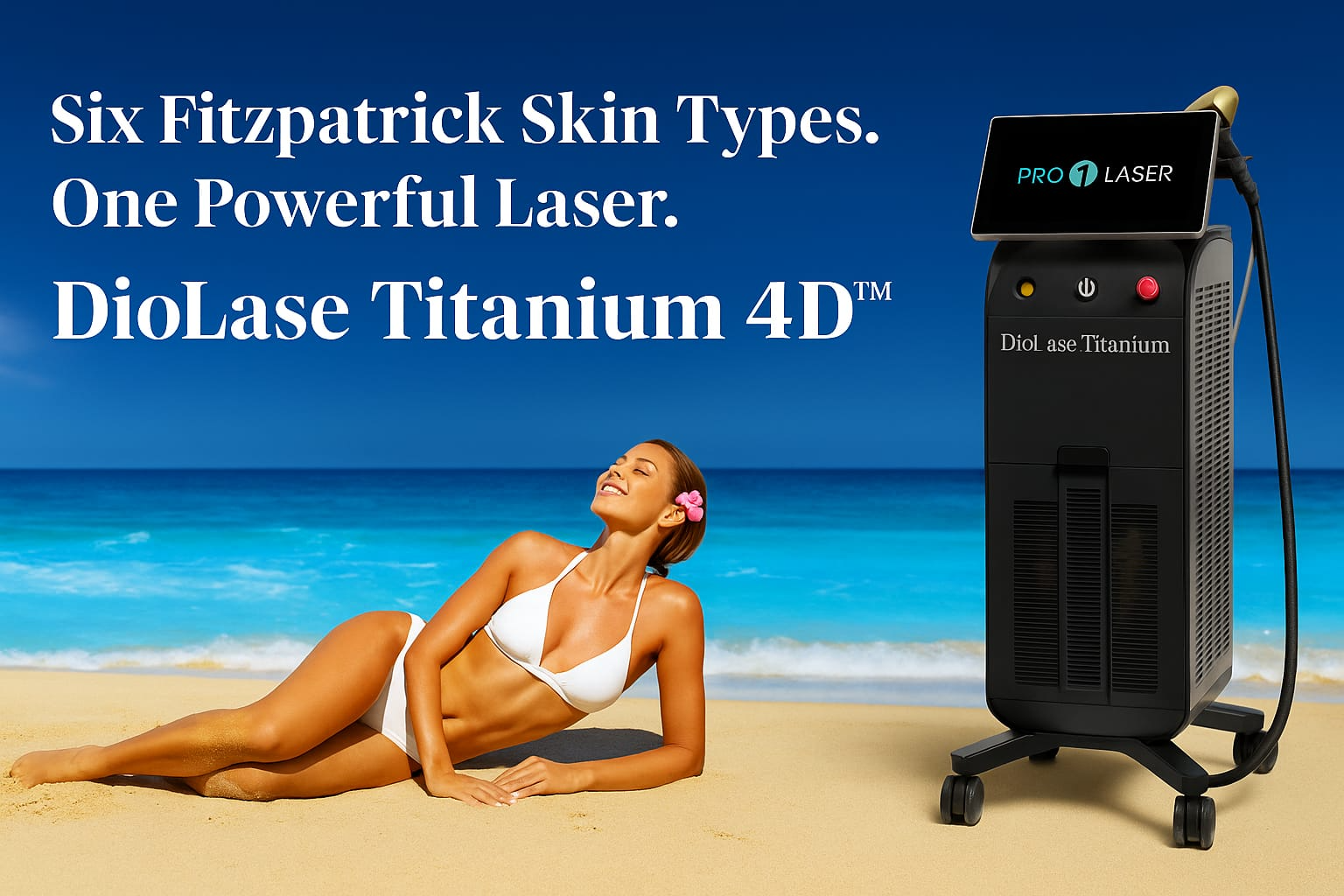
Pro 1 Laser’s DioLase Titanium™: Cooling That Doesn’t Quit
- Closed-loop thermal management — keeps sapphire tip ice-cold start to finish
- Consistent comfort — no flinching, no emergency energy drop
- Therapeutic fluence from first shot to last — every follicle gets decisive injury
- The sapphire contact cooling tip stays ice-cold for maximum comfort and efficacy.
In-Motion — Without the Overheating Drawback
The difference?
Our contact cooling is so effective that the sapphire tip stays ice-cold from the first pass in the morning to the last pass at the end of the day.
No heat buildup. No mid-treatment fade. That means your laser tech can keep parameters high throughout the entire session — whether it’s minute 1 or hour 8.
You get the smooth, even coverage of in-motion plus the decisive follicle destruction that comes with consistently high energy.
From 12–16 Sessions… to 4–5
When cooling holds steady, energy stays high — meaning follicles actually die off in fewer treatments.
- Higher parameters = faster clearance
- Less chance of regrowth
- Happier clients + better reviews
- Many clients complete their series in ~4–5 sessions (depending on area, skin type, and hair color).
Tech Tips for Vellus-Prone Areas
Tech Tips for Vellus‑Prone Areas (Laser) — Avoid Vellus Hair Growth After Laser Hair Removal
- Skip true vellus hair — focus on pigmented follicles
- Use stamp mode over low-fluence gliding
- Look for perifollicular edema/erythema as your endpoint
- Space facial sessions 6–8 weeks apart
- Always pair strong cooling with adequate pressure
If you’ve ever seen more hair after laser, it’s not “just your body” — it’s equipment limitations and protocol.
Pro 1 Laser’s DioLase Titanium™ solves this by keeping skin ice-cold, letting you run therapeutic energy without sacrificing comfort.
Result:
- Faster treatments
- Better clearance
- Lower regrowth risk.
FAQ — DioLase Titanium™ & Vellus Hair Growth
We don’t recommend treating non-pigmented vellus hair with any laser. DioLase Titanium™ is designed to decisively treat pigmented follicles without drifting into sub-therapeutic heating.
Cooling fade forces operators to lower energy, leading to under-treatment. DioLase Titanium™ keeps cooling stable so parameters stay high.
No. Consistent cooling is what makes safe, high-energy treatments possible — crucial for actual follicle destruction.


Comments are closed