Understanding the Difference Between Diode, Alexandrite, and Nd:YAG Lasers (and Why Wavelength Matters More Than You Think)
Pro 1 Laser Team · October 23, 2026
When it comes to laser hair removal, understanding the science behind the technology isn’t just for manufacturers. It’s essential knowledge for any clinic serious about delivering safe, consistent and effective results.
Not all lasers are created equal, and not all wavelengths perform the same way on different hair types and skin tones. Yet many devices on the market today offer limited options; some even omit the critical 808 nm diode wavelength, providing only 755 nm Alexandrite and 1064 nm Nd:YAG. The result? Ineffective treatments, frustrated clients and missed business opportunities.
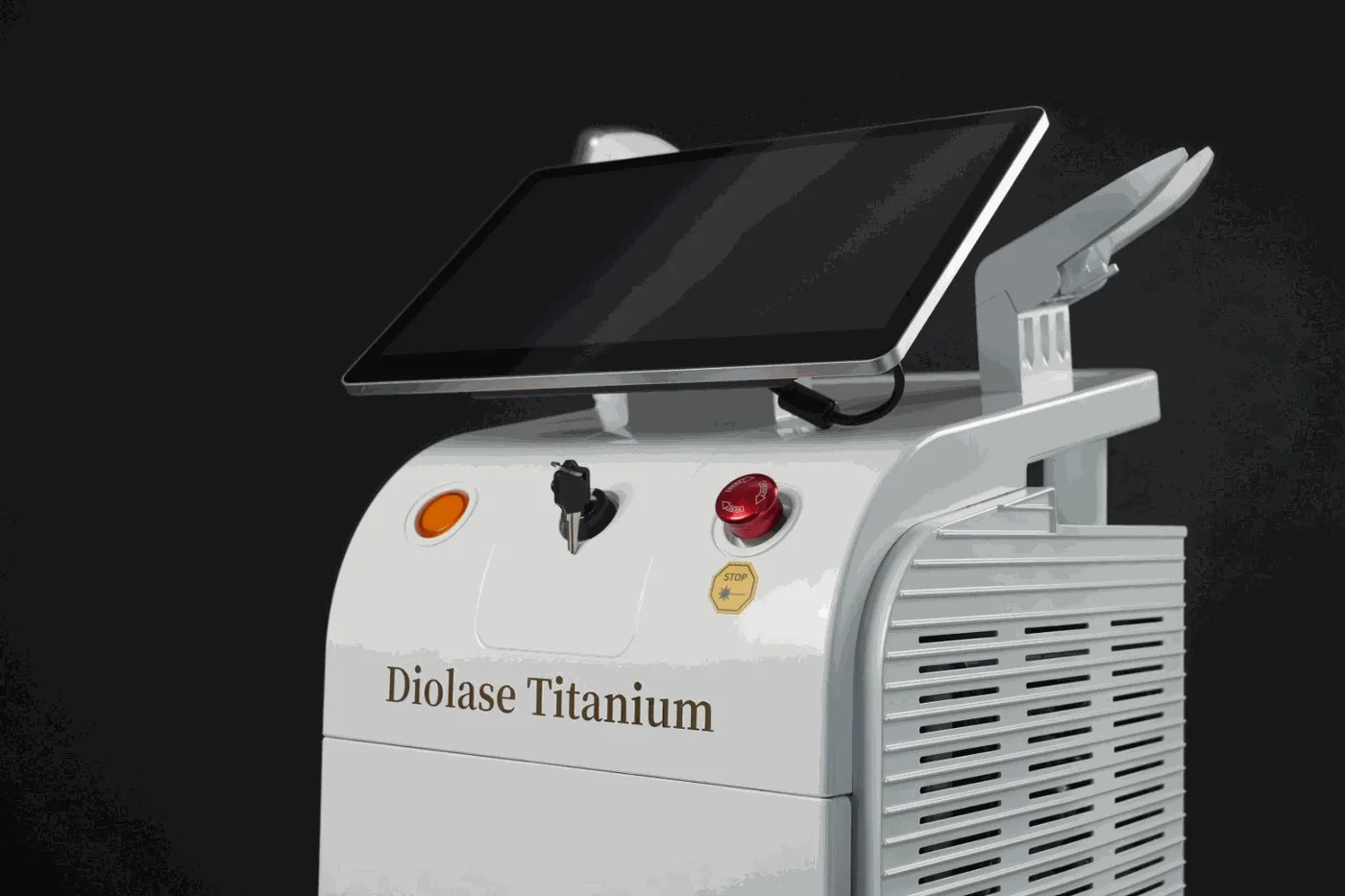
In this post, we break down how each wavelength works, dispel common myths (like the idea that Nd:YAG is “only for dark skin”), and explain why triple-wavelength systems like DioLase Titanium™ outperform limited dual-wavelength devices.
Laser hair removal 101: why wavelength matters
Laser hair removal works by emitting light at a specific wavelength that is absorbed by melanin (the pigment) in the hair follicle. The light energy converts to heat, damaging the follicle and inhibiting future growth.
However, the amount of melanin and the depth of the follicle vary depending on:
- Skin type (Fitzpatrick I-VI)
- Hair thickness
- Treatment area (face, legs, bikini and so on)
The correct wavelength is crucial to target the follicle effectively without harming the surrounding skin.
Breaking down the big three: Alexandrite, diode and Nd:YAG
- 755 nm (Alexandrite): strong melanin absorption, well suited to lighter skin and finer hair.
- 808 nm (diode): balances penetration and melanin absorption across a wide range of skin tones and hair types.
- 1064 nm (Nd:YAG): penetrates deeply with lower melanin absorption, for darker skin types and deeper follicles.
The 808 nm diode is considered the gold standard because of its ability to safely and effectively treat a wide range of skin tones and hair types with an optimal balance of absorption and penetration.
Myth vs. fact: “Nd:YAG is only for dark skin”
Fact: the 1064 nm Nd:YAG is indeed the safest wavelength for darker skin tones (Fitzpatrick IV-VI) because it penetrates deeply while minimizing absorption by epidermal melanin, which helps avoid burns and hyperpigmentation.
Myth: however, Nd:YAG is not the best choice for fine hair or lighter skin because it does not absorb melanin as efficiently as 755 nm or 808 nm. Using Nd:YAG alone on light skin or thin hair may lead to poor results and incomplete hair reduction.
Why skipping 808 nm is a mistake: the problem with some dual-wavelength devices
Several devices on the market advertise “dual-wavelength systems” using only 755 nm and 1064 nm. While this might sound comprehensive, it leaves a critical gap:
- 755 nm alone cannot safely treat darker skin.
- 1064 nm alone cannot effectively treat fine hair or medium-depth follicles.
- No middle ground means poor results on many clients.
The 808 nm diode bridges this gap. It offers the versatility needed to treat the majority of patients successfully, making it the workhorse wavelength in laser hair removal. Omitting it severely limits the effectiveness of the device across various skin types and hair profiles.
The DioLase Titanium™ advantage: triple-wavelength power in one handpiece
DioLase Titanium™ features:
- 755 nm Alexandrite for fine hair and light skin
- 808 nm diode (gold standard) for broad versatility across skin types and hair thicknesses
- 1064 nm Nd:YAG for safety on darker skin and deep follicles
Unlike devices that force clinics to compromise with limited wavelength options, DioLase Titanium™ delivers flexibility without compromise, allowing practitioners to confidently treat every patient who walks through the door. Its Quattro 4D™ configuration keeps the 808 nm diode at the core, with -35°C ICE sapphire contact cooling.
Choose science. Choose results. Choose DioLase Titanium™.
Stop losing clients to ineffective treatments caused by wavelength gaps. DioLase Titanium™ empowers your clinic with the technology you need to deliver safe, effective hair removal for all skin types.
Book your DioLase Titanium™ demo today: request a quote or demo from Pro 1 Laser.